The cameras don't look particularly remarkable.
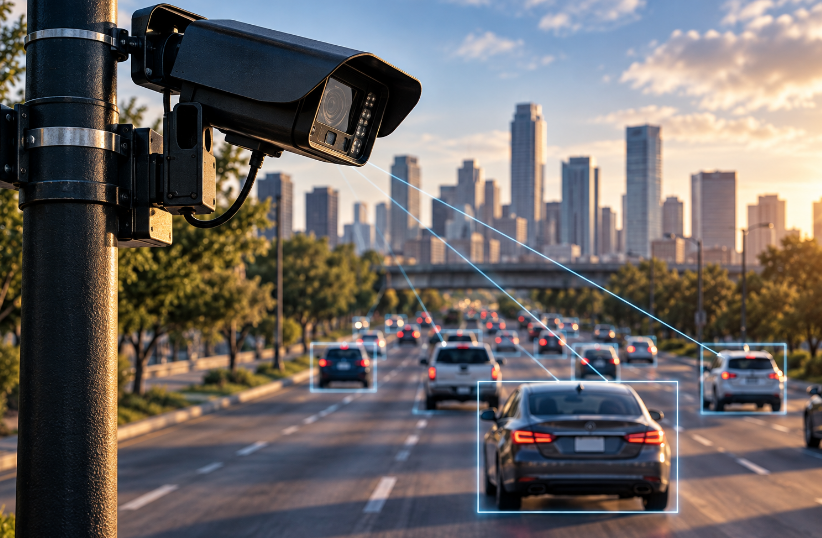
They can sit near an intersection, beside a roadway or at the entrance to a neighborhood. A vehicle passes. A camera photographs it.
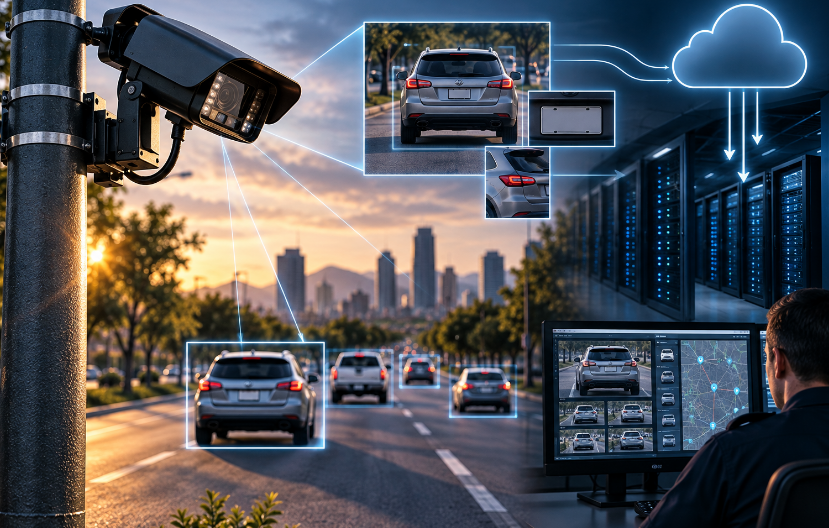
The system can record the license plate, an image of the vehicle, characteristics such as its color and make, and the date, time and location where it was observed. Flock Safety, one of the country's prominent providers of automated license plate reader technology, calls these devices license plate readers, or LPRs.
One photograph of a car traveling down a public road might not sound much like surveillance.
But multiply that observation by hundreds or thousands of cameras.
Make the observations searchable.
Connect cameras operated by different agencies.
Then ask a computer:
Where has this vehicle been?
That is where an increasingly important Fourth Amendment debate begins.
The legal question isn't simply whether police can see a license plate on a public street. Courts have long distinguished activities exposed to public view from activities occurring in places where people have stronger expectations of privacy.
The harder question is whether technology changes the constitutional equation when individual public observations are assembled into a system capable of reconstructing a person's movements.
And courts are already being asked to decide where that line lies.
A Camera Doesn't Just See a License Plate
An automated license plate reader is different from an ordinary security camera.
The important feature isn't necessarily the photograph.
It's what happens to the photograph afterward.
According to Flock's current LPR policy, its system can collect a license-plate image, vehicle image, vehicle characteristics, plate number and state, date, time and camera location. The company says the information is transferred to its cloud infrastructure and that its default retention period is seven days, although a different period may apply depending on a customer's law or policy.
Individual agencies can operate under different retention arrangements.
For example, the Riverside County Sheriff's Office's Flock transparency portal reported in July 2026 that its system retained data for 30 days. The portal listed 1,769 cameras and approximately 5.86 million vehicle detections during the preceding 30 days, along with 12,804 search sessions.
That scale illustrates why the constitutional controversy isn't really about one camera.
It's about the network.
The Search Happens After You Drive Past the Camera
Traditional police surveillance usually begins with a target.
Investigators suspect someone of committing a crime and then follow that person, conduct surveillance or seek records connected to the investigation.
Large license-plate databases can work differently.
The collection can happen first.
The investigation can happen later.
Millions of vehicles can be photographed as they travel normally through public streets. If police later become interested in a particular vehicle, investigators may be able to search previously collected observations.
Flock describes one use of its technology as retroactive search—using historical observations to investigate crimes after they occur. Its systems can also generate real-time alerts when a vehicle matches information on a hot list.
That creates an unusual surveillance model:
The government doesn't necessarily have to know that it wants to watch you when you pass the camera.
The record may already exist when investigators decide they want to look.
Norfolk, Virginia Became a Testing Ground
One of the most closely watched legal challenges to Flock's technology developed in Norfolk, Virginia.
Residents Crystal Arrington and Lee Schmidt sued the city, alleging that its network of automatic license plate readers violated the Fourth Amendment.
Their lawsuit described 172 Flock cameras installed around Norfolk.
According to the federal court's description of their allegations, the cameras photographed vehicles and Flock's software analyzed information including license plates, vehicle color, make, model and distinguishing features to create what the plaintiffs characterized as a vehicle fingerprint.
The residents' theory went beyond the idea that an individual photograph was private.
Instead, they challenged what could be accomplished by combining many observations.
That distinction is important.
There is little mystery about whether someone standing on a sidewalk can see a car drive past.
The constitutional controversy concerns whether a sufficiently comprehensive technological network can transform those public observations into something qualitatively different.
The Fourth Amendment Was Written Long Before Searchable Databases
The Fourth Amendment protects against unreasonable searches and seizures.
But applying that principle to modern technology has repeatedly forced courts to confront circumstances the Constitution's authors could never have anticipated.
Police once needed officers to physically follow a person.
Then came electronic tracking devices.
Cell phones created detailed digital records.
Wireless providers accumulated historical location information.
And now networks of roadside cameras can automatically record where vehicles appear.
The Supreme Court has already encountered versions of this problem.
In United States v. Jones, the government installed a GPS tracking device on a vehicle and monitored its movements for 28 days. The Supreme Court unanimously concluded that the government's conduct constituted a Fourth Amendment search, although the justices offered different reasoning about why.
Then came Carpenter v. United States.
There, investigators obtained historical cell-site location information from a wireless carrier. The records provided a detailed account of the defendant's movements over time.
The Supreme Court held in 2018 that obtaining the historical location records at issue was a Fourth Amendment search and generally required a warrant.
The significance of Carpenter extended beyond cell towers.
It demonstrated that the constitutional analysis of location information can depend on scale, duration and technological capability, rather than merely asking whether any single observation could have occurred in public.
That is one reason license-plate-reader networks present such an interesting constitutional problem.
One Photograph and a Month of Movement Are Not Necessarily the Same Question
Imagine a police officer sitting beside a road.
Your car passes.
The officer sees your license plate.
Now imagine 1,000 automated cameras distributed throughout a region.
They operate continuously.
Every time your vehicle passes one, the system records where and when it happened.
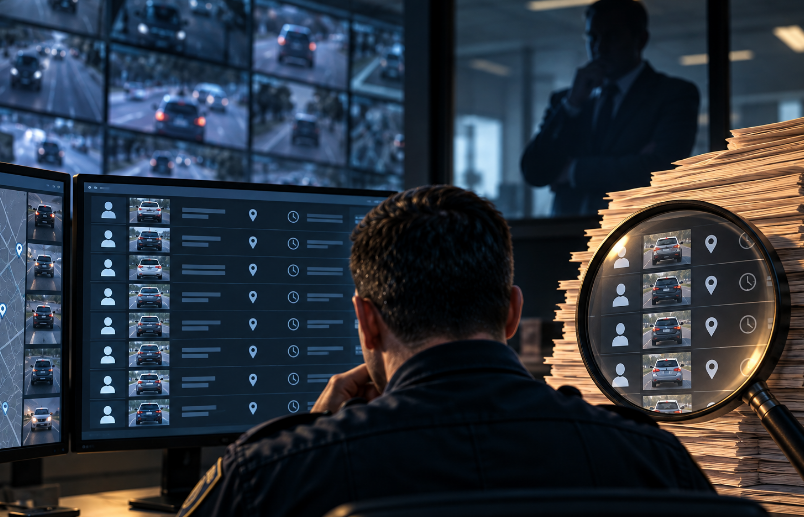
Later, someone searches your plate and retrieves those observations.
At some point, the argument goes, the question may stop being whether an officer could have observed your car at a particular intersection.
The question becomes whether the government has assembled a sufficiently detailed record of your movements to implicate a reasonable expectation of privacy.
Privacy advocates have relied heavily on that distinction.
Law-enforcement agencies and Flock have emphasized the other side: vehicles and license plates are being photographed while exposed to public view.
And recent courts examining actual Flock deployments have generally found that distinction significant.
Virginia Courts Have Rejected Some Fourth Amendment Challenges
In a criminal case involving a Norfolk Flock search, Commonwealth v. Church, a Virginia trial court suppressed evidence after concluding that police needed a warrant.
The Virginia Court of Appeals reversed in 2025.
The appellate court emphasized the facts of the actual search before it rather than hypothetical future capabilities of the system. It concluded that the Flock system in that case photographed the defendant's license plate and vehicle while he traveled on public roads and that a warrant was not required for police to access those observations.
Another Virginia appellate decision, Robinson v. Commonwealth, reached a similar conclusion in 2026.
The Virginia Court of Appeals held that the use of Flock information in that case did not constitute a Fourth Amendment search. The court also pointed to federal district court decisions involving Flock systems in Richmond and Norfolk that had reached similar conclusions.
The Norfolk residents' broader federal challenge also encountered an unfavorable ruling on the merits. A federal judge ultimately granted summary judgment to Norfolk, concluding that the city's Flock program, on the record before the court, did not violate the plaintiffs' Fourth Amendment rights.
Those decisions are significant.
But they don't necessarily answer every constitutional question that could arise from every future license-plate-reader network.
The Details Matter
Fourth Amendment cases are intensely dependent on facts.
Consider the difference between these systems:
A camera records your car once.
A network records it three times during a month.
A network records it 300 times.
A statewide system records nearly every significant trip you take.
A nationwide network can reconstruct months or years of travel.
Those aren't necessarily constitutionally interchangeable simply because every observation originated on a public road.
Courts examining current Flock systems have repeatedly emphasized the actual quantity and quality of information collected about particular defendants.
In Robinson, for example, the Virginia Court of Appeals discussed an earlier federal case in which a system had captured approximately 2,500 vehicle photographs during a 30-day period but only three depicted the defendant's vehicle.
That is a very different factual record from a hypothetical database capable of reconstructing nearly every movement a person makes.
Technology can therefore change the constitutional question without changing the camera.
The Supreme Court Has Seen This Problem Before
The tension resembles an idea that has appeared repeatedly in modern privacy cases:
Information that isn't particularly revealing in isolation can become extraordinarily revealing when aggregated.
One observation might establish that a vehicle passed an intersection at 9:14 a.m.
A collection of observations could potentially reveal that the same vehicle routinely travels from one residence to another.
More observations might suggest where its driver works.
Where the driver worships.
Which doctors or hospitals the driver visits.
Which political meetings, protests or organizations the driver attends.
Which people the driver regularly visits.
The individual observations occurred in public.
The resulting pattern can nevertheless reveal information about private life.
That difference between observation and aggregation sits near the center of the emerging legal debate.
The Network Can Be More Important Than the Camera
Flock says access to its system is restricted to approved users, searches are associated with individual accounts and searches must have an investigative reason. The company also says data sharing between agencies is optional and controlled by participating agencies.
Those safeguards matter.
So do local policies.
The Riverside County Sheriff's Office, for example, states that its Flock system may be used for law-enforcement purposes and prohibits uses including immigration enforcement, traffic enforcement, harassment or intimidation, personal use and searches based solely on a protected characteristic. Its transparency portal says searches require a valid reason and that hot-list alerts require human verification before action.
But the constitutional question isn't necessarily resolved by whether a system has good policies.
Policies can restrict what officials choose to do.
The Fourth Amendment determines what government officials are constitutionally permitted to do.
Those aren't always identical questions.
There Is Also a Question of Mistakes
Automated systems aren't infallible.
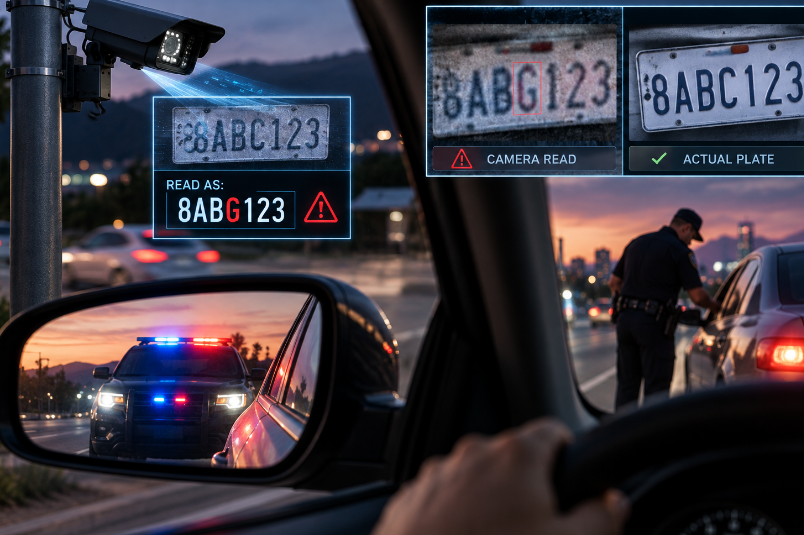
Flock itself acknowledges that license-plate translation can sometimes be incomplete or inaccurate and instructs users to confirm computer-generated plate translations before acting on an alert or search.
That creates another issue separate from the broader surveillance debate.
A license plate may be misread.
A vehicle may have been sold.
A plate may have been stolen or duplicated.
A database may contain outdated information.
An alert therefore isn't necessarily proof that the person driving the vehicle is the person police are seeking.
The technology can provide an investigative lead.
What police may constitutionally do because of that lead is a separate question.
The Cameras Are Becoming a Political Question Too
The debate is no longer confined to courtrooms.
Communities around the country are reconsidering how automated license-plate readers should be deployed and governed.
In September 2026, for example, reporting showed that San Diego County had roughly 1,400 identified ALPR cameras, with about 45 percent associated with Flock, while public debate intensified over privacy, oversight and data sharing.
Texas has also seen state and local reconsideration of automated license-plate-reader deployments amid privacy concerns.
Supporters emphasize the systems' ability to identify stolen vehicles, locate wanted suspects and generate investigative leads quickly.
Critics focus on the creation of large databases documenting the movements of people who are not suspected of committing crimes.
Those are policy disagreements that legislatures and communities can address even when a particular use of the technology satisfies the Fourth Amendment.
The Constitution establishes a floor.
Governments remain free to impose additional statutory and policy restrictions.
The Constitutional Question May Change as the Technology Changes
This is what makes the Flock debate especially important.
The legal answer in 2026 doesn't necessarily tell us what the answer will be if surveillance networks become dramatically more comprehensive.
Suppose cameras eventually cover nearly every major intersection.
Suppose data is retained for years rather than days.
Suppose searches span thousands of agencies.
Suppose artificial intelligence can identify a vehicle without knowing its license plate and reconstruct months of travel almost instantly.
At some point, courts could confront a factual situation substantially different from the systems considered in today's cases.
The Fourth Amendment has encountered that technological progression before.
A police officer following a suspect wasn't the same thing as attaching a GPS tracker for weeks.
Obtaining a small number of business records wasn't treated the same way as acquiring a comprehensive history of a person's physical movements from cell-site data.
The constitutional significance of surveillance can change when technology makes something possible on a scale that human observation never realistically could.
The Camera Isn't Really the Question
That may ultimately be the most important thing to understand about the legal fight over Flock cameras.
The question isn't simply:
Can police photograph a license plate on a public road?
Modern courts have generally been receptive to the proposition that they can.
The more difficult questions are what happens after that photograph is taken:
How many observations are collected?
How long are they stored?
How broadly are they shared?
How easily can they be searched?
How much of a person's movements can the resulting database reconstruct?
And at what point does a collection of ordinary public observations become something much more powerful?
Today's courts are beginning to answer those questions based on the systems presently before them.
But the technology isn't standing still.
Neither, historically, has the Fourth Amendment.
That means the most consequential court case about automated license-plate surveillance may not have been decided yet.